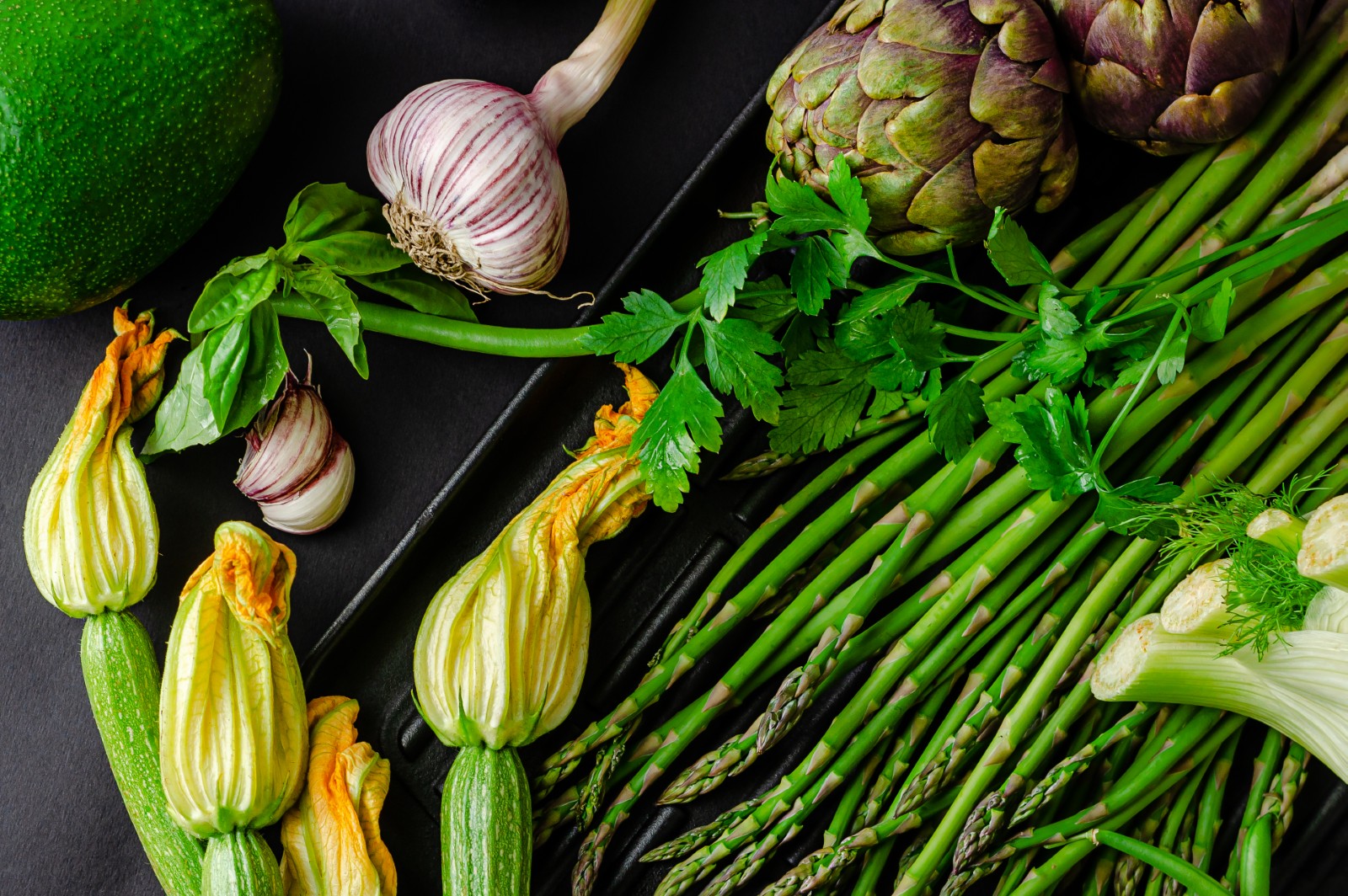
After months dominated by roots, brassicas and slow‑cooked comfort, spring marks a welcome reset in the UK kitchen. Lighter flavours, shorter cooking times and brighter plates all start with one thing: new‑season produce re‑entering the larder.
This is the moment when ingredients do the talking — and when well‑judged menus feel effortless rather than overworked.
Asparagus: The Definitive Spring Signal
Few ingredients announce spring as clearly as British asparagus. Short‑seasoned and instantly recognisable, it carries strong value perception while remaining versatile and simple to handle.
Best used with restraint, asparagus lends itself to:
- Brown butter, lemon and soft herbs
- Poached or soft‑boiled egg with hollandaise
- Chargrilled with olive oil and aged cheese
Its appeal lies in its clarity — guests understand it, look forward to it, and associate it with quality and seasonality.
Wild Garlic, Spring Onions and Fresh Herbs
Early greens replace winter’s heaviness with aroma and vibrancy. Wild garlic, in particular, offers impact with minimal intervention, while spring onions, chives, parsley and dill bring freshness across both savoury and bakery applications.
Common spring uses include:
- Wild garlic butter or oil for potatoes and breads
- Herb‑forward dressings for salads, fish and lamb
- Soft herb finishes replacing heavier sauces
These ingredients allow kitchens to refresh dishes without restructuring entire menus.
Jersey Royals and New‑Season Potatoes
The arrival of new potatoes, especially Jersey Royals, signals a shift away from purely comforting starches toward lighter, more elegant sides.
Paired simply with:
- Cultured or salted butter
- Yoghurt‑based dressings
- Fresh herbs or citrus zest
New‑season potatoes deliver nostalgia, seasonality and consistency — a rare combination that works equally well in casual and premium settings.
Spring Proteins: Lighter, Cleaner Cooking
As produce becomes greener, proteins follow suit. Spring menus often favour:
- Spring lamb, paired with mint, yoghurt or green vegetables
- Trout and line‑caught white fish, matched with peas, asparagus or lemon
- Free‑range eggs, used across brunch, lunch and bakery
These proteins perform best when cooked simply, allowing seasonal accompaniments to lead the plate.
Peas, Radishes and Watercress
Early vegetables such as peas, radishes and watercress bring crunch, pepperiness and sweetness — adding contrast without complexity.
Effective applications include:
- Peas folded through risottos, pastas or warm salads
- Radishes shaved raw with vinegar, oil and herbs
- Watercress used fresh to cut through rich elements
They offer colour and texture while keeping dishes feeling fresh and modern.
Why Spring Produce Works Commercially
Seasonal ingredients align naturally with:
- Improved availability and consistency
- Better value at peak supply
- Reduced need for heavy sauces or labour‑intensive techniques
For operators, spring produce allows menus to feel updated without increasing pressure on kitchens — a crucial advantage in a staffing‑conscious environment.
Spring Is About Restraint, Not Reinvention
The most successful spring menus tend to share one principle: clarity. Fewer elements, better sourcing and confident execution resonate far more than complexity.
As guests become more ingredient‑aware, spring produce offers hospitality businesses a chance to reconnect food to season, place and purpose — supported by skilled teams who understand how to let ingredients shine.