EYE AND FACE PROTECTION

Many occupational eye injuries occur because employees are not wearing any eye protection, while others result from wearing improper or poorly fitting eye protection. Employers must be sure that their employees wear appropriate eye and face protection and that the selected form of protection is appropriate to the work being performed and properly fits each employee exposed to the hazard.
PRESCRIPTION LENSES & EYE PROTECTION
Examples of potential eye or face injuries include:
- Dust, dirt, metal or wood chips enter the eye from activities such as chipping, grinding, sawing, hammering, the use of power tools or even strong wind forces.
- Chemical splashes from corrosive substances, hot liquids, solvents or other hazardous solutions.
- Objects swinging into the eye or face, such as tree limbs, chains, tools or ropes.
- Radiant energy from welding, harmful rays from the use of lasers or other radiant light
TYPES OF EYE PROTECTION
- Safety spectacles
- Goggles
- Welding shields
- Laser safety goggles
- Face shields
HEAD PROTECTION
Employers must ensure that their employees wear head protection if any of the following apply:
- Objects might fall from above and strike them on the head,
- They might bump their heads against fixed objects, such as exposed pipes or beams or
- There is a possibility of accidental head contact with electrical hazards
FOOT AND LEG PROTECTION
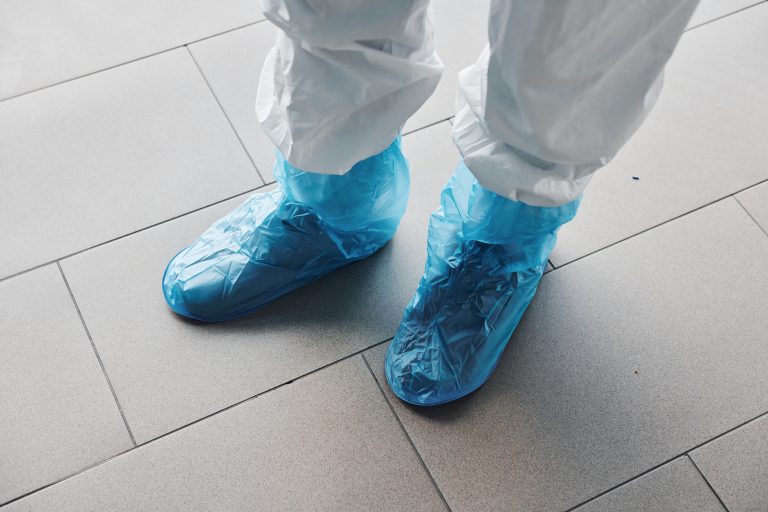
Foot and leg protection choices include
- Leggings
- Metatarsal guards
- Toe guards
- Combination foot and shin guards
- Safety shoes
BODY PROTECTION
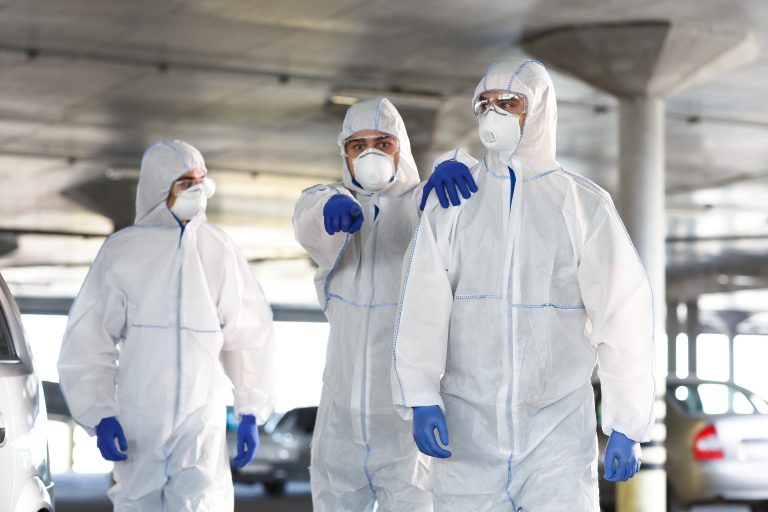
Protective clothing comes in a variety of materials, each effective against particular hazards, such as:
- The paper-like fibre used for disposable suits provides protection against dust and splashes
- Treated wool and cotton adapt well to changing temperatures, are comfortable and fire-resistant, and protect against dust, abrasions, and rough and irritating surfaces.
- Leather is often used to protect against dry heat and flames.
- Rubber, rubberised fabrics, neoprene and plastics protect against certain chemicals and physical hazards.