From the Pantry
Workplace First Aid Certificate
The principles and responsibilities of a First Aider in the workplace
Dealing with Minor Injuries in the Workplace
Abdominal Trauma

For most people, abdominal pain is commonly caused by over-exertion or digestive issues. Symptoms such as vomiting or severe stomach ache can also result from food poisoning and may pass without long-term effects.
However, severe or intense abdominal pain can indicate a serious internal injury or recent trauma.
A life-threatening condition such as peritonitis is an infection of the tissue surrounding the abdomen. It can be recognised by swelling, pain, or tenderness in the abdomen and is often caused by intestinal damage or a diseased appendix.
Any suspected internal abdominal injury should be treated seriously and referred to Emergency Services.
Allergic Reactions (Anaphylactic Shock)
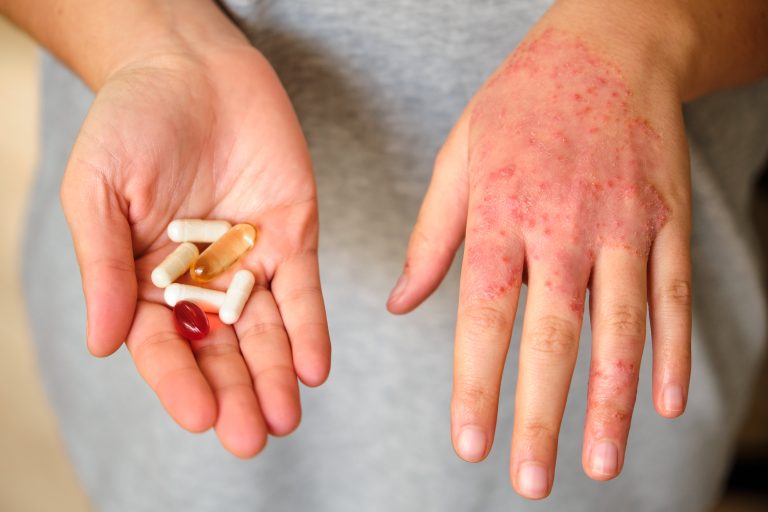
If a patient progresses from a mild allergic reaction into anaphylactic shock, immediate action is required.
Treatment guidelines:
-
Call Emergency Services immediately and state that anaphylaxis is suspected
-
If the casualty has prescribed allergy medication (e.g. an adrenaline auto-injector), help them to use it if trained to do so
-
Sit the casualty upright to aid breathing
-
If they become faint or collapse, lay them down with legs slightly raised
-
Monitor their condition until an ambulance arrives
-
Further doses of adrenaline may be given at intervals if trained
-
Keep the casualty calm and as comfortable as possible
Burns and Scalds
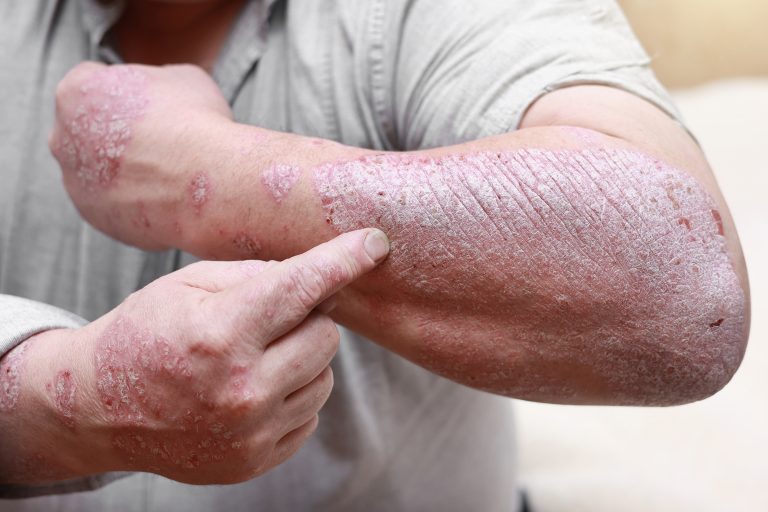
Burns and scalds can be caused by:
-
Radiation (sunburn)
-
Dry heat (fire, hot surfaces)
-
Extreme cold
-
Chemicals (acids, solvents)
-
Electricity
Types of burns:
-
First-degree burns – Superficial burns affecting only the top layer of skin. Skin appears red and painful.
-
Second-degree burns – Partial thickness burns where deeper skin layers are damaged. Blistering and swelling may occur, with increased infection risk.
-
Third-degree burns – Full thickness burns where all layers of skin are damaged. The area may appear charred or stiff, with a high risk of shock and infection.
Severe burns require immediate medical attention.
Contusions (Bruises)
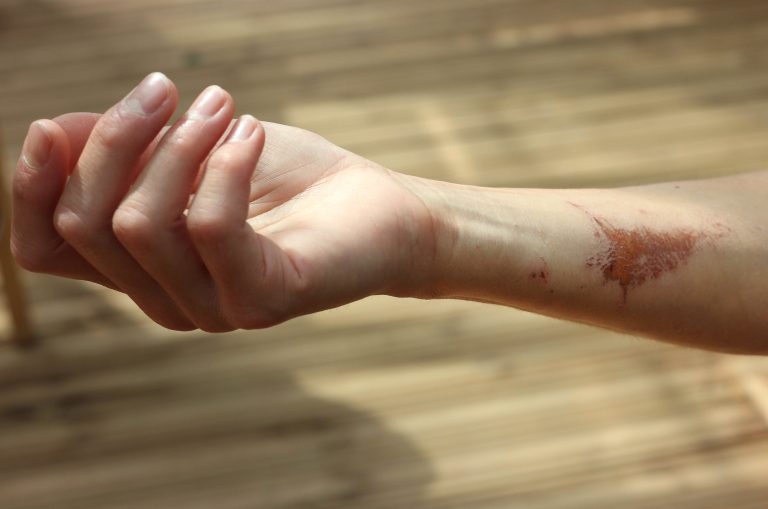
Bruising occurs when blood vessels beneath the skin are damaged.
Treatment:
-
Apply a cold compress or ice pack gently to the bruised area
-
This helps reduce pain and minimise swelling
Crush Injuries
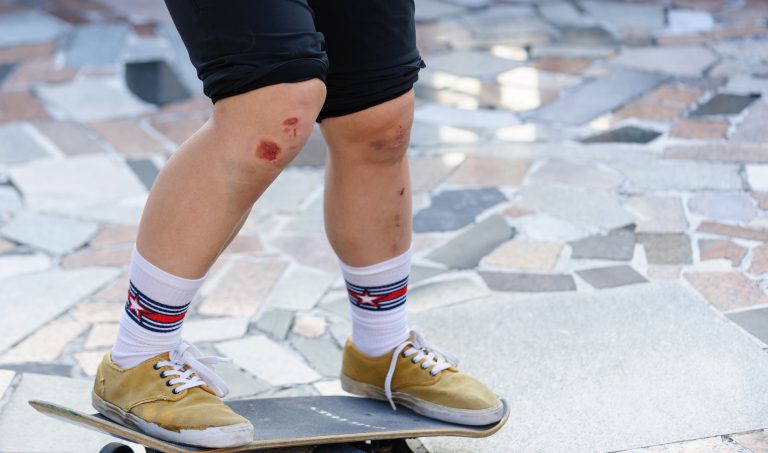
Crush injuries occur when pressure restricts blood flow to a body part.
If blood flow is restricted for more than 15 minutes, toxins can be released into the bloodstream, leading to Crush Syndrome, which is life-threatening.
Treatment guidelines:
-
Ensure the surrounding area is safe
-
Determine how long the casualty has been trapped
-
If trapped for more than 15 minutes, do not attempt to move them
-
Call Emergency Services immediately
-
If trapped for less than 15 minutes, treat cuts and wounds and limit bleeding
-
Be prepared to perform CPR if necessary
Cuts and Scrapes
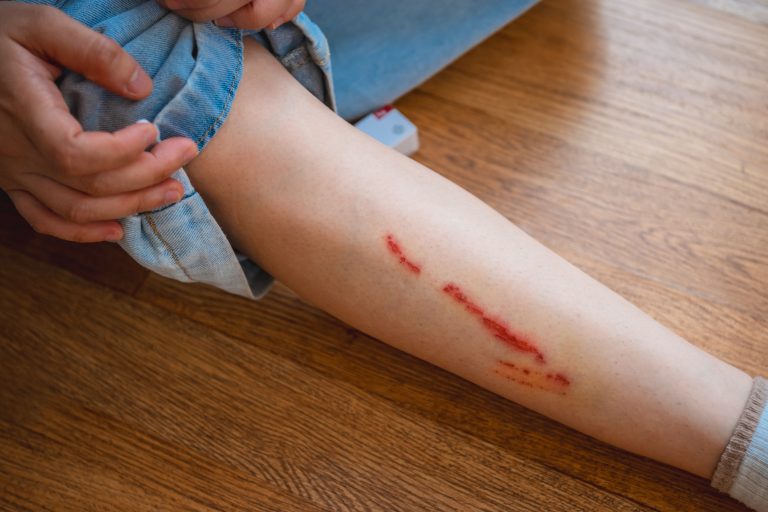
Cuts and scrapes are among the most common workplace injuries. While often minor, they can still lead to infection if untreated.
Minor cuts may be caused by sharp objects, while scrapes remove surface layers of skin.
Treatment:
-
Wear gloves to prevent infection
-
Remove visible debris (glass, gravel, etc.)
-
Clean the wound with sterile wipes or clean water
-
Apply gentle pressure if bleeding continues
-
Cover with a sterile dressing and monitor for infection
Dislocations
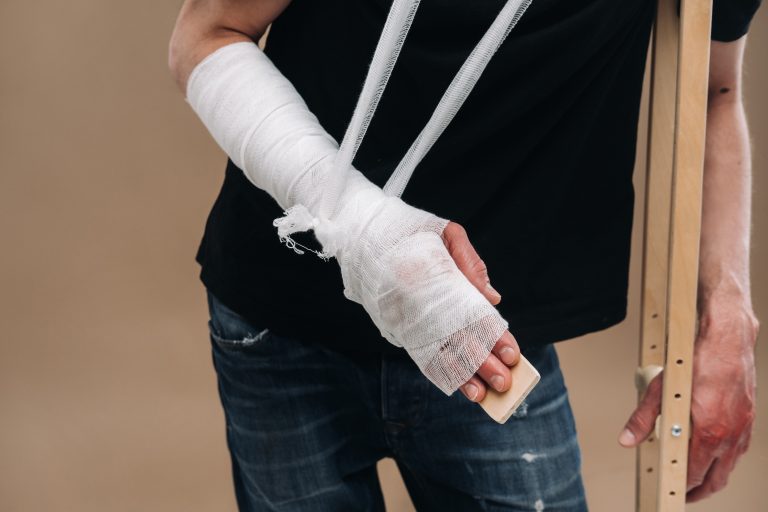
A dislocation occurs when the ends of bones are forced out of their normal position within a joint. This is extremely painful and prevents use of the limb.
Common sites include shoulders, hips, elbows, knees, fingers, and wrists.
Treatment:
-
Do not attempt to reposition the joint
-
Call Emergency Services
-
Apply a cold compress to reduce swelling
-
Provide pain relief if appropriate
-
Keep the casualty calm and comfortable
Eye Injuries

Eye injuries range from irritation to serious trauma that may affect vision permanently.
Common causes include:
-
Blows to the eye
-
Foreign objects trapped between the eyelid and eye
-
Cuts or grazes to the surface of the eye
If debris cannot be safely removed or there is bleeding from the eye, seek immediate medical attention.
Extreme Cold (Hypothermia and Frostbite)

Frostbite often occurs alongside hypothermia and affects fingers, toes, and extremities.
Treatment guidelines:
-
Warm the casualty slowly
-
Use blankets and remove wet clothing
-
Give warm drinks or chocolate if conscious
-
Cover the head and extremities
-
Avoid rapid rewarming that may cause further damage
Extreme Heat (Heat Exhaustion and Heatstroke)
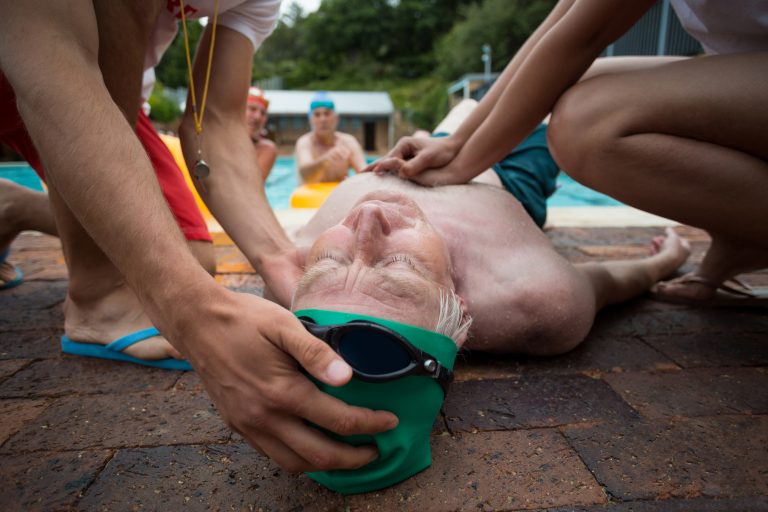
Heat-related illness can escalate quickly and become life-threatening.
Treatment:
-
Move the casualty to a cool area
-
Give plenty of fluids
-
Monitor body temperature
-
If symptoms worsen, call Emergency Services
-
Cool the casualty using wet sheets, fans, or sponging
-
Continue monitoring until medical help arrives
Foreign Objects
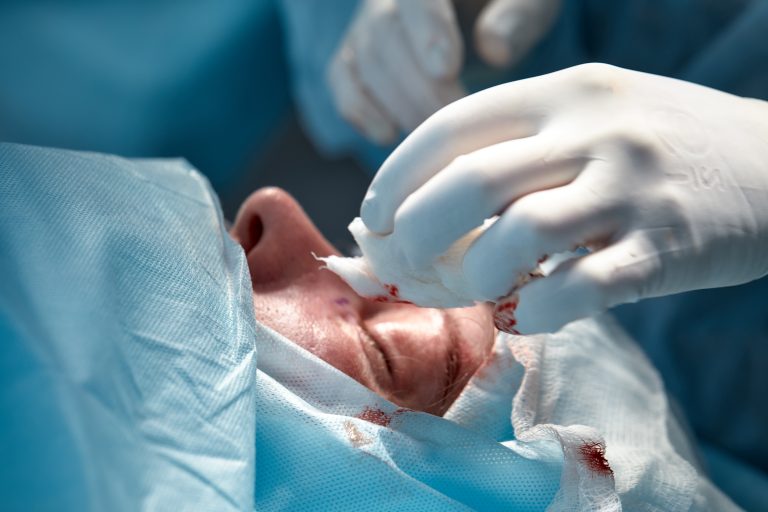
Foreign objects may become lodged in the nose, ears, eyes, or other orifices.
General guidance:
-
Do not attempt to remove deeply embedded objects
-
If bleeding persists or removal is unsafe, seek medical help
Nose:
-
Lean the casualty forward
-
Apply pressure to the soft part of the nose
-
If bleeding lasts longer than 30 minutes, call Emergency Services
Eye:
-
Flush gently with clean water if possible
-
If unsuccessful, cover with gauze or an eye pad and seek medical attention
Head Injuries
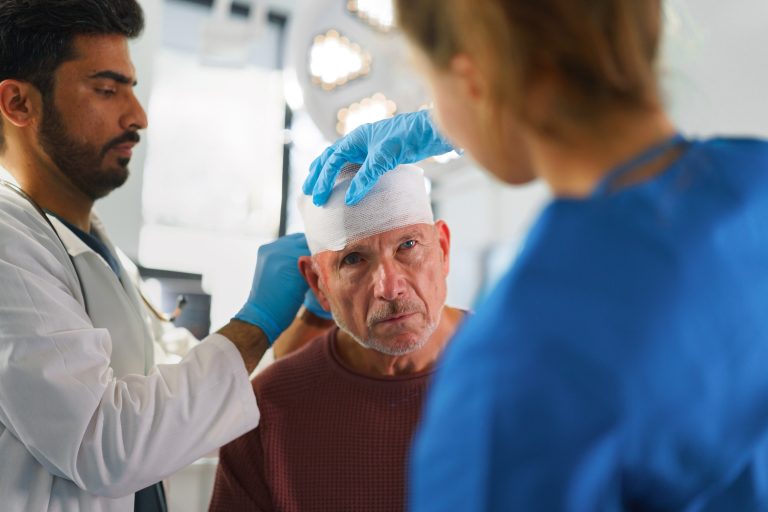
Head injuries must always be taken seriously.
Treatment:
-
Keep the casualty calm and comfortable
-
If a skull fracture is suspected, do not touch or apply pressure
-
Control bleeding if safe
-
Perform basic life support if required
-
Call Emergency Services for any loss of consciousness or confusion
Small Splinters
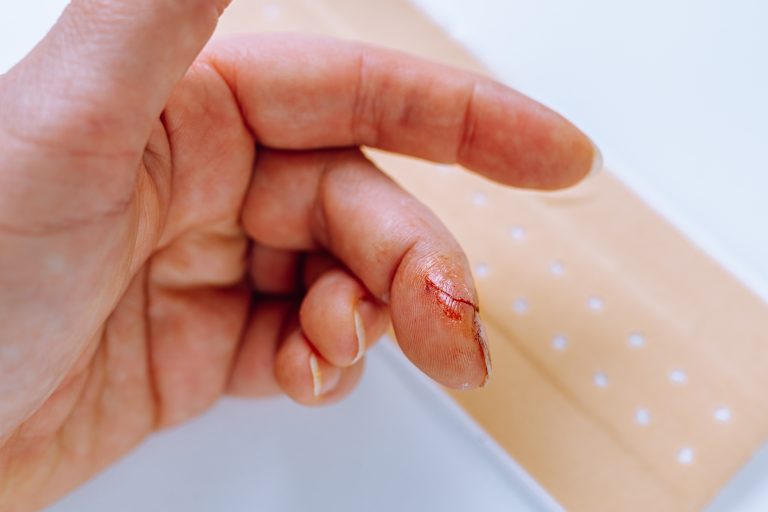
Small splinters embedded near the surface of the skin can sometimes be removed safely.
Treatment:
-
Apply a plaster over the splinter and remove it slowly to encourage extraction
-
If the splinter remains embedded or signs of infection appear, refer to a doctor or hospital
Summary
-
Always consider internal injuries and allergic reactions
-
Burns vary in severity and must be assessed carefully
-
Crush injuries become more dangerous over time
-
Dislocations and head injuries should never be self-treated
-
Early and correct First Aid can prevent serious complications
Take The Course
"*" indicates required fields