Scene Survey
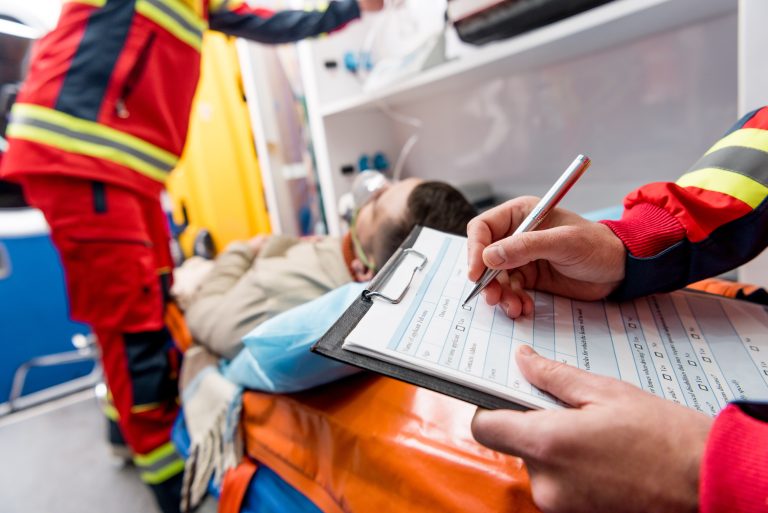
When a First Aider first arrives at the scene, the primary action will be to perform a Scene Survey. This is basically a quick overall assessment of the incident to ensure the safety of everyone present and allow efficient treatment of the casualty.
This is sometimes covered by the acronym CLAP:
-
Control the situation
-
Look for potential hazards and risks
-
Assess the situation
-
Protect those present and Prioritise injury treatments
Questions to Ask at the Scene
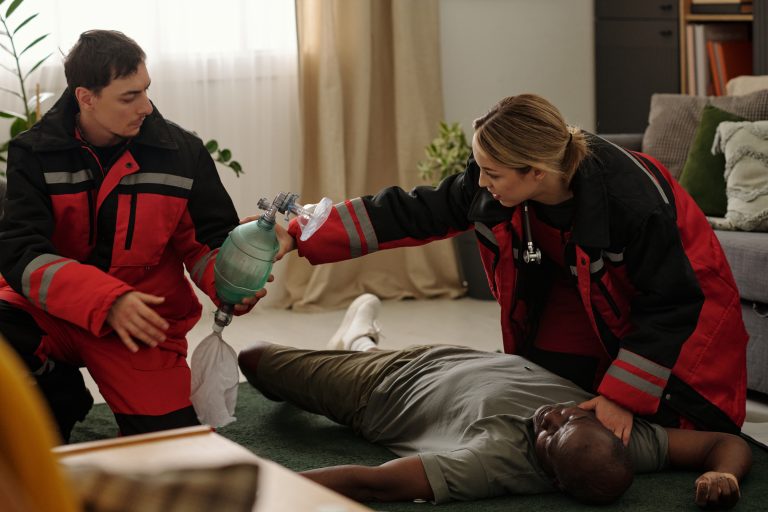
When you first attend a casualty and enquire about the injury and how it occurred, you need to be concise and efficient with your questions.
Ideally, get a full summary of the incident from the casualty if possible, but information from a witness is just as important.
Make sure you understand how and why the incident occurred. For example, if a casualty suffered an injury from a fall or trip, you may consider the following questions during a Scene Survey:
-
From what height did the casualty fall?
-
On to what type of surface did they fall?
-
In what position did they land?
-
Have they moved from their original position?
-
What caused the casualty to fall/trip? Is it still a risk?
Scene Survey – Additional Considerations
You may also need to consider:
-
Are they wearing any kind of protective gear?
-
Were they obeying Health and Safety guidelines?
-
And so on…
This information should be recorded and passed onto Emergency Services or Medical Professionals when appropriate. The type of questions will obviously need to be changed for each incident.
What Is a Primary Survey and Why Is It Important?
Following the Scene Survey, a First Aider should proceed with a Primary Survey of the incident.
This is accomplished by performing a systematic check of the casualty’s symptoms and deciding if any injury or illness is genuinely life-threatening.
The purpose of a Primary Survey is to perform an assessment of the casualty and determine the severity of their injuries.
How to Conduct a Primary Survey
The Primary Survey should be applied to all casualties present, in an equal and methodical manner, as this will be the foundation on which treatment and future actions are based.
The set procedure for performing this survey is known as DRABC (or DRABCD), sometimes called “Doctor A.B.C.”
DR ABCD – Primary Survey
DR ABCD stands for:
-
Danger – Make sure the area around the casualty is safe to approach
-
Response – Check to see if the casualty is responsive by talking to them or gently shaking them (sometimes known as “Shake and Shout”)
-
Airway – Make sure the airway(s) of the casualty are clear and unobstructed (tilt the head back slightly)
-
Breathing – Check for at least 10 seconds that the casualty is breathing normally through their mouth
-
Circulation – Check for signs of bleeding and treat wounds if appropriate
-
Disability – Check to see if the casualty has an existing health condition that may complicate or affect their treatment or increase the chances of a life-threatening situation
This process should ensure that the severity of injuries is correctly assessed and treatments prioritised.
Casualty Information and Victim’s Information
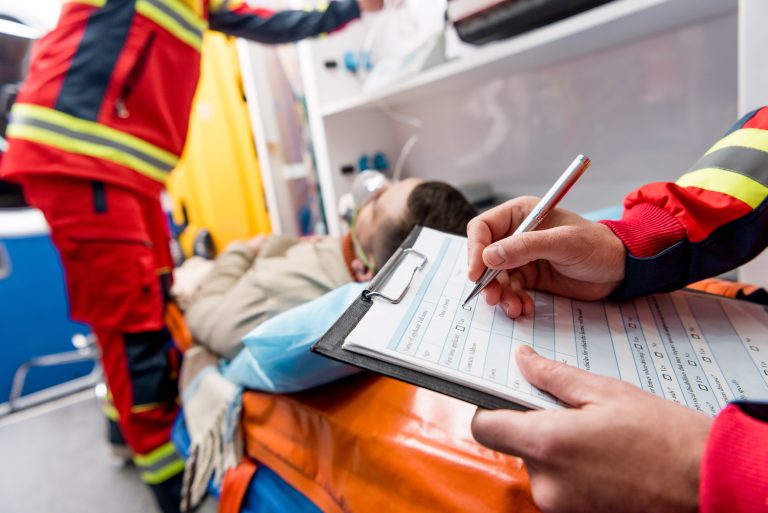
Along with the information gathered during the Scene and Primary Surveys, it is essential that vital details are gathered regarding the incident and the patient themselves.
This ensures that the First Aider has enough details to start treatment and that Emergency Services can continue it.
The First Aider should concentrate on three areas:
-
History – Full details about the casualty, the incident, and how the injuries were sustained
-
Signs – Details about what the First Aider noted with their own senses (what they saw, heard, or smelt)
-
Symptoms – How does the casualty feel? Are they sick, upset, in pain, or numb?
Casualty Information – WHAT3 Key Acronym

-
What happened?
-
How did it happen?
-
Are they wearing medical alert bracelets or chains?
-
Time of the incident?
-
Signs of injury?
-
Known medication or conditions?
-
Eaten recently?
Once this information has been gathered, you can proceed with treatment.
The Recovery Position
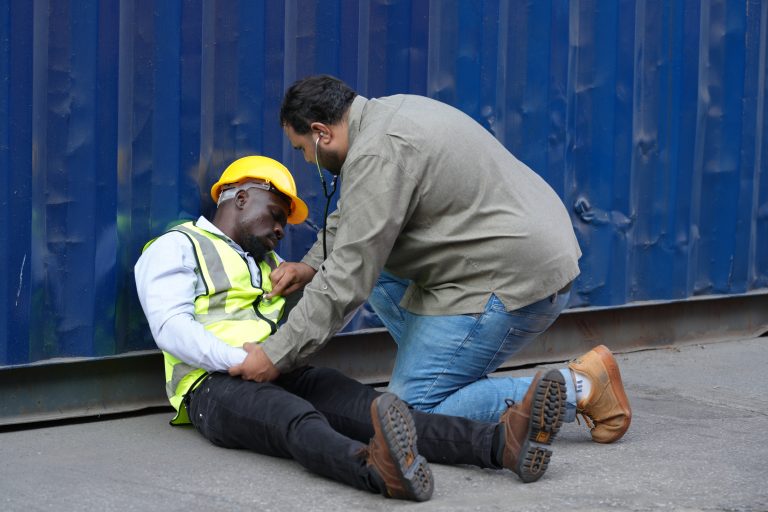
The Recovery Position is the recommended body position that all unconscious casualties (with no breathing difficulties) should be placed in by First Aiders and Emergency Services.
In this position, they can be left for a short period of time to allow other actions to take place or further casualties to be treated.
It keeps the airway clear, aids the draining of fluids from the system, and stops the tongue from blocking the throat.
How to Achieve the Recovery Position
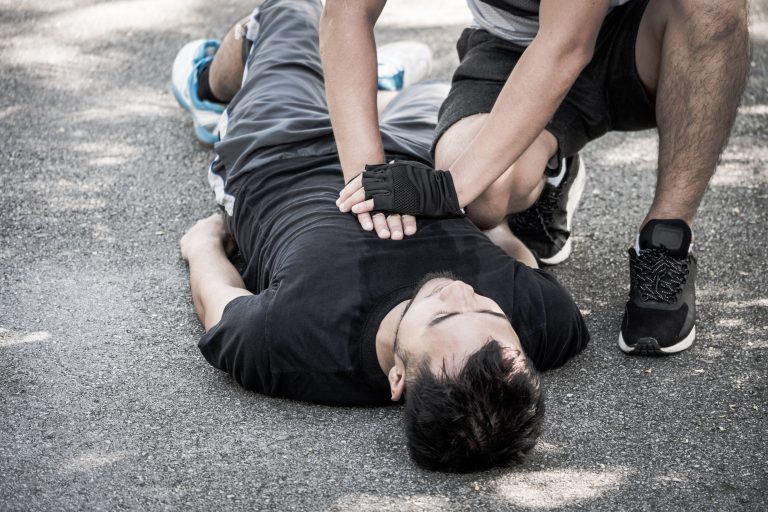
To achieve this position:
-
Remove any loose objects from the casualty and kneel down next to them
-
Place the casualty’s nearest arm at a right angle to the body
-
Bring the other arm across the casualty’s chest and rest it on their face/cheek
-
Grasp the casualty’s clothes around the knee and draw the leg up, keeping the foot flat to the floor
-
Keeping the pose in place, roll them onto their side
-
Adjust the legs and arms so that their airway remains clear and they can breathe easily on their own
-
The casualty is now in the recovery position, but should still be checked regularly
Accident Reporting

All details and actions taken during an accident should be documented accurately for future use.
The employer is ultimately responsible for the reportage of all workplace accidents (usually via an Accident Book), but the First Aider should also ensure that their observations are recorded correctly.
As per RIDDOR requirements, an accident form should be completed by a First Aider. It must contain all relevant information regarding the incident and be filled out in a clear and concise manner.
Depending on later events, this information may be directly used for further reports or audits.
Summary
In this module, you have learnt that:
-
Performing an accurate Primary Survey is crucial to an incident and will determine further actions
-
There are specific questions that need to be asked when arriving at the scene of an accident
-
The DR ABCD acronym provides guidance when assessing the severity of an incident
-
Placing a patient in the Recovery Position is the best way to help a victim breathe whilst they are unresponsive
-
Essential victim and incident information must be documented when performing Accident Reporting