Fires – The Elements of Fire
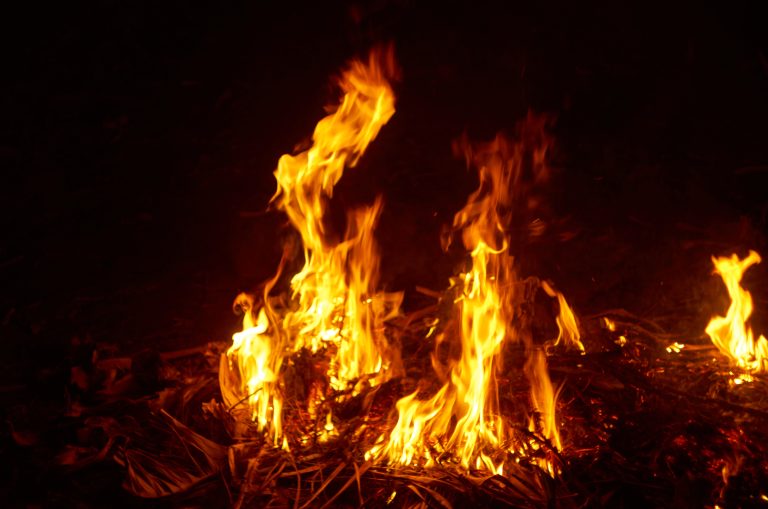
Fire needs three “ingredients” to start and to continue to burn:
-
Ignition (existing flame or spark)
-
Fuel (wood, petrol, etc.)
-
Oxygen (air)
To successfully extinguish a fire, one element of this “triangle” must be removed from the environment. Limiting access to flammable materials and/or oxygen is often the most direct way of combating an emergency involving fire.
Leaving a Burning Building
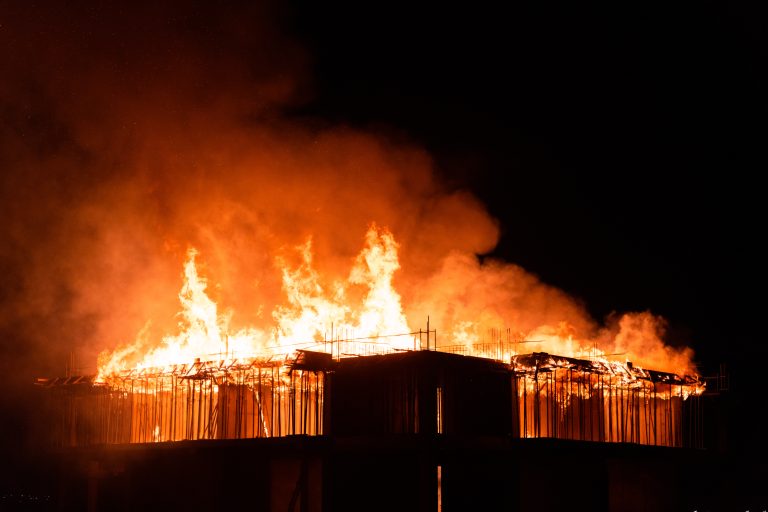
Once a fire is confirmed as being active in a property, a fire alarm must be sounded as soon as possible.
You should always be aware of fire evacuation procedures as per regular drills and available information, and try to aid with evacuation as much as possible, communicating with the assigned Fire Marshal.
Ensure the fire is sealed and cannot spread in your wake.
The following guidelines should always be obeyed:
-
Never go back into a burning building for ANY reason until the “All Clear” signal by an official Fire Marshal
-
Do not use lifts when evacuating
-
Do not attempt to move anything that is aflame in the property
-
Do not attempt to smother any flames with material that is not fire-retardant
-
Never attempt to “fire-fight” or put yourself at unnecessary risk
Clothing on Fire
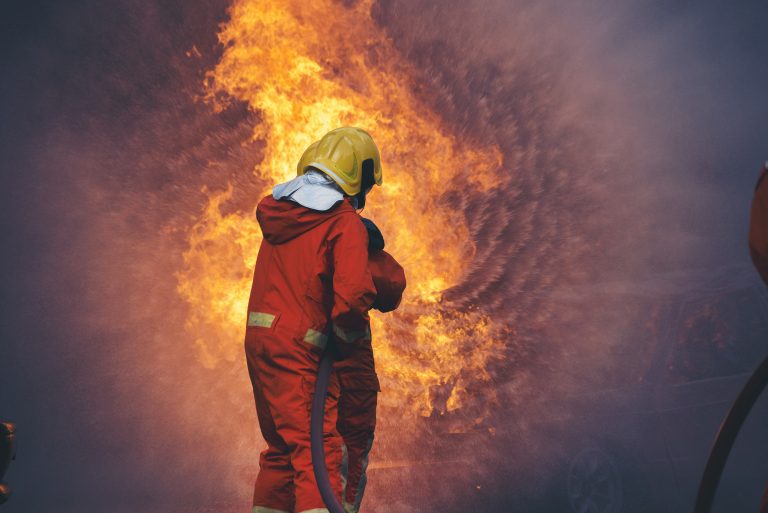
If a person’s clothing catches fire, every moment can risk severe injury and burns to their body. Any opportunity to help them should be taken immediately.
Remember the popular safety mantra: Stop, Drop, Roll.
Perform the following actions immediately:
-
Stop – Prevent the casualty from running and panicking and limit their movements. Movement will accelerate the progress of the flames.
-
Drop – Push the casualty to the floor and cover them in a heavy fabric or material to smother the flames.
-
Roll – Roll the casualty along the ground until all flames are extinguished.
Treat the casualty as per normal First Aid treatment as soon as possible, cooling the burns as appropriate.
Smoke and Fumes
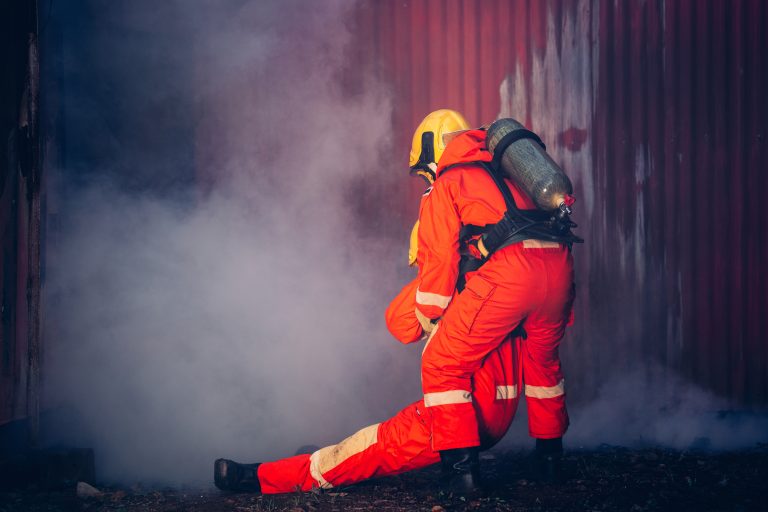
Any fire in a property will almost always create a highly dangerous environment filled with toxic smoke and fumes.
Not only will this mean that oxygen is in short supply, but the atmosphere may be filled with poisonous carbon monoxide and gases. This is why it is essential to evacuate a property as soon as a fire takes hold.
If you are trapped within a burning building:
-
Stay as low as possible – smoke rises naturally and the air will be more breathable at ground level
-
If possible, seal yourself in a room, blocking gaps in the door with heavy material or carpeting
-
Locate a window large enough to escape through, lowering yourself backwards and feet-first if safe
Electrical Incidents – Caution
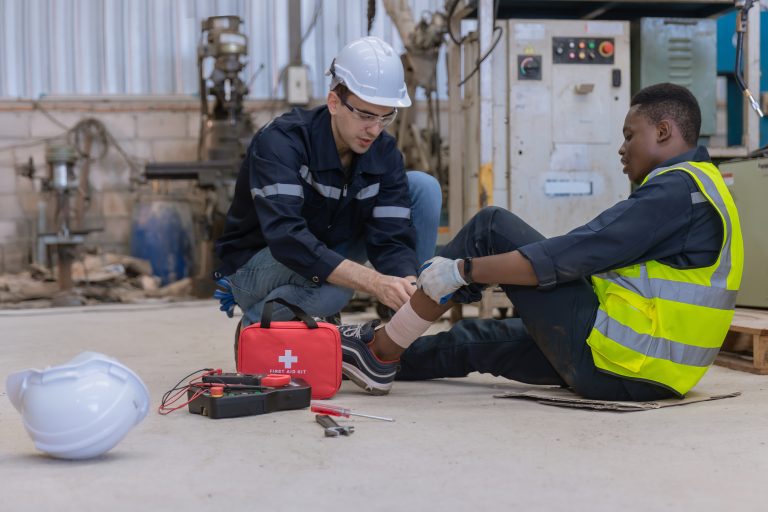
The main risk from accidental exposure to live electricity is electrocution, where the current has the potential to interrupt the body’s functions and cause organs to fail.
When treating a casualty who has been the victim of an electrical incident:
-
Do not move or touch the patient if they are still in possible contact with a source of electricity
-
Do not approach the casualty with anything metallic
-
Stay away from nearby wiring
-
Ensure that all local power is turned off
-
Check the breathing and responsiveness of the casualty as soon as it is safe to do so
-
Also check the casualty’s body for electrical burns
Breaking Contact with Electricity
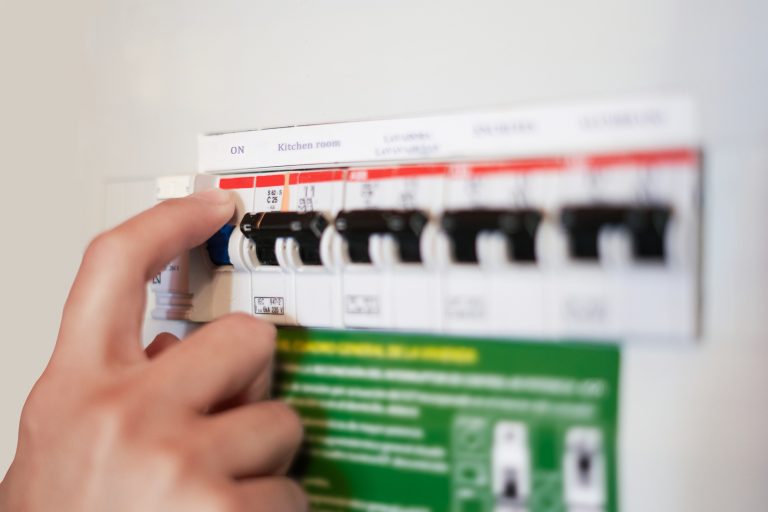
A First Aider should take the following actions to ensure that a casualty is disconnected from any sources of electricity:
-
Visually check the casualty for any obvious connections to an electrical source. You are in danger of electrocution by merely touching a “live” casualty
-
Identify all local power sources, disconnect cabling, remove plugs, and turn off generators
-
If you can identify the source of the incident and can safely move it away from the casualty and yourself, then do so
-
Stand on something that will insulate you whilst doing so (a thick book or plastic mat will do). A wooden pole or broom may also be used to move objects without risk
If it is not possible to action the above steps, use a rope to drag the casualty from the danger area (without touching them directly).
When there is definitely no contact between the patient and any kind of electricity, treatment and handover to Emergency Services can continue.
High Voltage Current
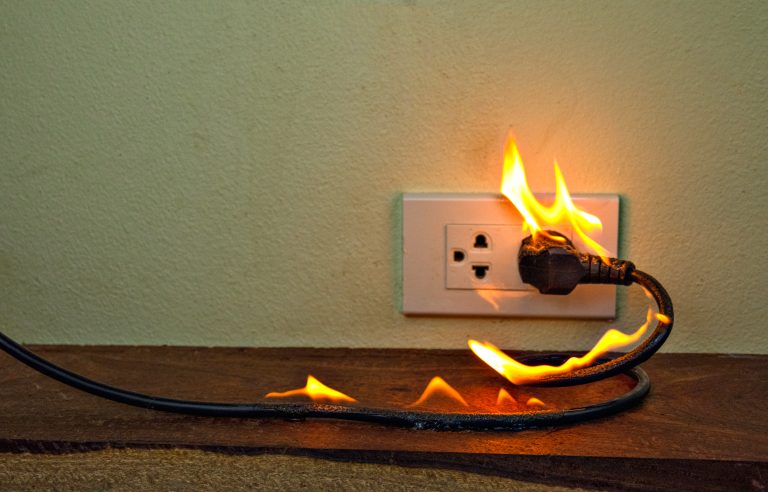
An incident involving contact with high-voltage sources will invariably involve outside power lines or heavy-duty electrical cables.
If a person survives contact with high voltages, they will have been exposed to temperatures up to 5,000°C (9,032°F). This will produce extreme burns to the skin and body.
The shock can induce muscle spasms that will “throw” the victim a considerable distance. The damaged electrical equipment may also arc currents up to 18 metres (20 yards) from the origin.
Therefore, it is a priority that incidents of this sort allow for the source of the incident to be disabled before approaching the casualty or allowing bystanders into the area.
Immediately check the patient’s heartbeat and breathing when access is safe.
Low Voltage Current
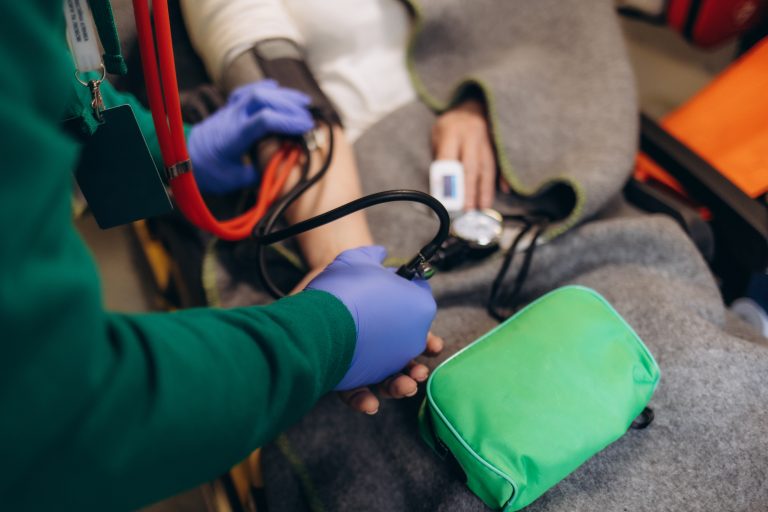
Also known as “Domestic Current”, low-voltage electrical incidents are more directly associated with the average workplace and properties.
However, this can still cause serious injuries or fatalities at a lower voltage.
These incidents are usually due to faulty domestic wiring or defective electrical equipment. Children are most often the recipients of these incidents, but employees should also be aware of risks associated with wiring and equipment.
Accidental exposure to conducting substances (such as water) can also increase the risk of low-voltage electrocution.
Lightning
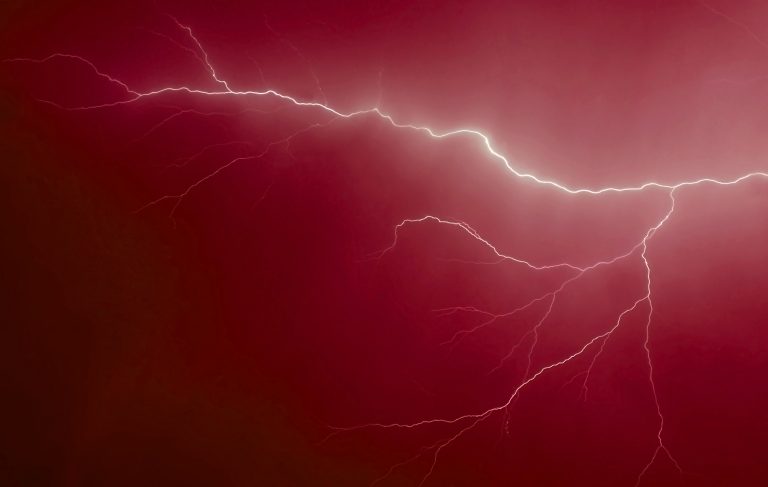
Though not considered a natural risk in most workplaces, this natural-born form of electricity can still be a danger worth considering.
A lightning strike will seek contact with the ground, travelling through the shortest possible route via the tallest feature in the vicinity of the storm.
Being close to a lightning strike can cause a casualty to be knocked to the floor, have their clothes set on fire, and cause their heart to fail.
Due to the brevity of a strike, the casualty is immediately disconnected from the source of electricity and treatment can start immediately.
However, it is possible that lightning could strike again in the same place given the right circumstances, so the area should still be cleared.
Water Incidents – Caution

Incidents involving water can occur in the shallowest of water sources (ponds, baths, etc.) and may involve people of any age.
Many incidents of drowning and people getting into difficulties occur due to the UK’s cold waters and strong currents.
Sudden immersion in (or exposure to) cold water is sufficient to provide a shock and cause the heart to literally stop. It can also cause hypothermia and problems with breathing.
Water Incidents – Immediate Care
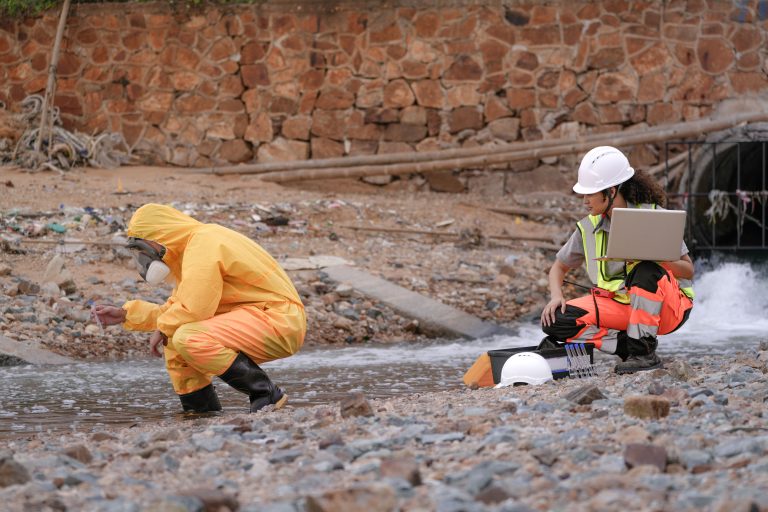
Precautions should be taken when dealing with deep and unfamiliar bodies of water.
If a casualty has been retrieved from a water-related incident and is not conscious, lift them well clear of the water and support their head and neck.
Lay them down and check their breathing, ensuring that their airways are clear.
Start resuscitation if necessary or hand over to Emergency Services.
Rescuing a Person from Water

When a person is experiencing difficulties in the water, your primary objective is to get them onto dry land as soon as possible and start the necessary treatment.
-
Try to stay out of the water entirely
-
Use something nearby (branch, pole, rope, etc.) to extend your reach and pull them in
-
Use a flotation device if available to keep them on the surface
-
Only enter the water if the casualty panics or becomes unresponsive
-
If none of this is achievable, alert Emergency Services of the severity of the situation immediately
Once Removed from Water – Next Steps

Once removed from the water, your next steps are to:
-
Shield the casualty from the cold and wind to prevent the onset of hypothermia
-
Warm their body and remove any wet clothing, replacing it with dry substitutes if possible
-
Perform CPR if trained and deemed necessary
-
Ensure they are sent to A&E for evaluation and further treatment, even if they seem to have recovered entirely
Summary
In this module, we have learned that:
-
There are different levels of First Aid training (FAW and EFAW)
-
A First Aider should consider common Do’s and Don’ts during an emergency
-
A First Aider has the responsibility to protect themselves as well as the casualty
-
It is important to confirm the safety of the area before treatment takes place
-
Fire, water, and electricity incidents each require specific actions
-
CPR may be required if the patient is unresponsive during an incident