Incident Management at Work – Introduction

This module focuses on how incidents should be managed in the workplace, including roles, responsibilities, decision-making in emergencies, and assessing risks before providing assistance.
Topics to be Covered in This Module
-
Emergency First Aid at Work
-
Roles and responsibilities of a worker when an incident occurs
-
Do’s and Don’ts in an emergency
-
Questions to ask yourself:
-
What are the dangers?
-
Is it safe for you to go up to the casualty?
-
What has caused the accident or situation?
-
What do you think the main injuries could be?
-
How to make the area safe?
-
How to assess the casualties?
-
-
Water incidents:
-
Caution
-
Rescuing a person from water
-
Emergency First Aid at Work
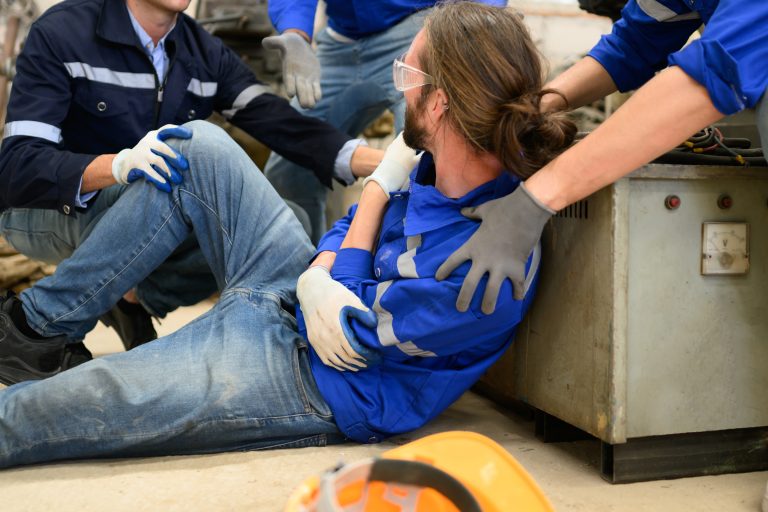
We have already briefly covered the different levels of First Aid training:
-
FAW (First Aid at Work)
-
EFAW (Emergency First Aid at Work)
EFAW differs somewhat from FAW, as the skillset needed is expected to be for a workplace that falls into a low-risk category. First Aiders will be expected to deal with more minor injuries and have a basic awareness of emergency treatments.
Emergency First Aid at Work – Key Responsibilities
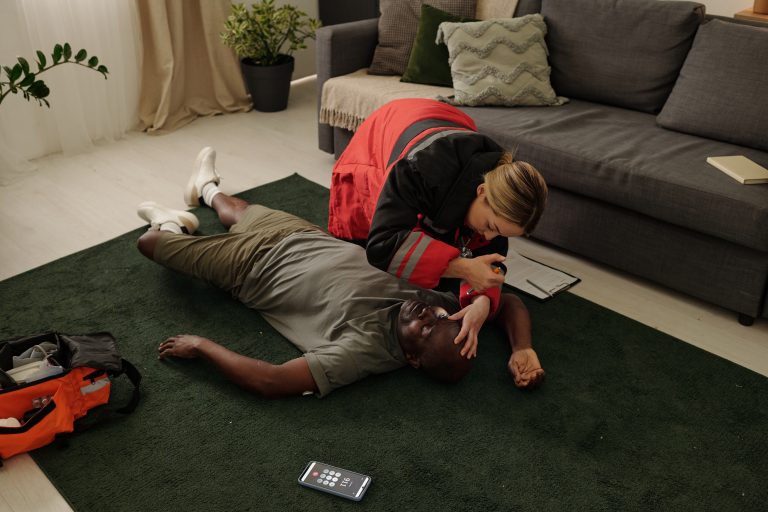
This can be broadly summarised as:
-
Recording accidents, contacting Emergency Services, and preventing cross-infections
-
Applying First Aid to an employee who may be choking, bleeding, or suffering from shock
-
Applying resuscitation to an employee who may be unconscious
-
Giving appropriate First Aid treatment for minor injuries such as cuts, bruises, burns, and scalds
-
Acting appropriately during an emergency and providing as much medical assistance as deemed possible
Roles and Responsibilities of a Worker When an Incident Occurs
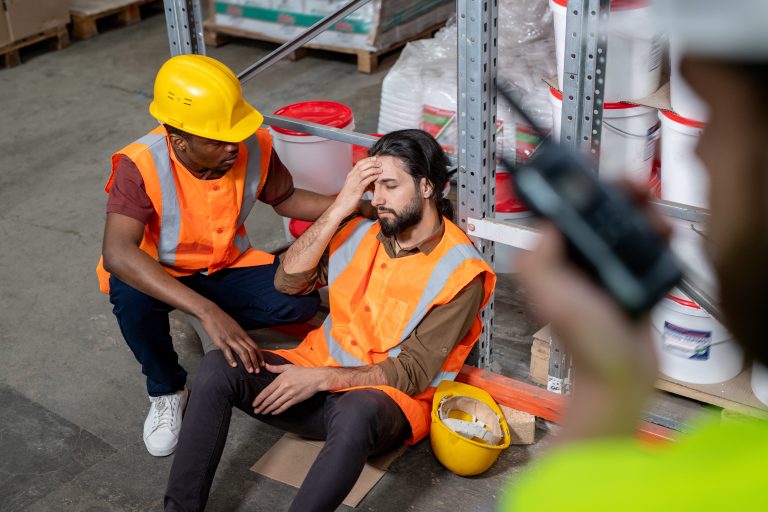
During an emergency or accident, a worker trained in EFAW will be expected to play a significant role in the proceedings and manage the incident itself.
Their main responsibilities will be to:
-
Ensure the safety of those injured, bystanders, and themselves
-
Ensure or arrange the arrival of Emergency Services
-
Assess the situation and severity of the injuries or illness
-
Provide medical assistance according to their training and knowledge, and according to priorities
-
Make a full record of all details regarding the incident and actions taken, which should be handed over to Emergency Services when they arrive
-
Ensure mandatory paperwork is completed
Do’s and Don’ts in an Emergency
The best practice during an emergency will depend on the casualties, injuries, and type of incident.
There are, however, some common-sense “Do’s and Don’ts” that all First Aiders should be aware of.
Do:
-
Tell the casualty (and those in the vicinity) that you are a trained First Aider
-
Remain confident and calm, and explain any activities or tasks that you are performing
-
Calm the patient’s trust and try to alleviate their pain as much as possible
-
Assess the severity of a patient’s condition and prioritise accordingly
-
Maintain a good level of personal hygiene and keep yourself and those around you safe from infection
Don’t:
-
Delay calling 999 / Emergency Services unless you are positive they are not required
-
Move the injured party unless it is absolutely essential to do so
-
Forget to clear the area at the incident and ensure there is no risk to any personnel
Questions to Ask Yourself – What Are the Dangers?
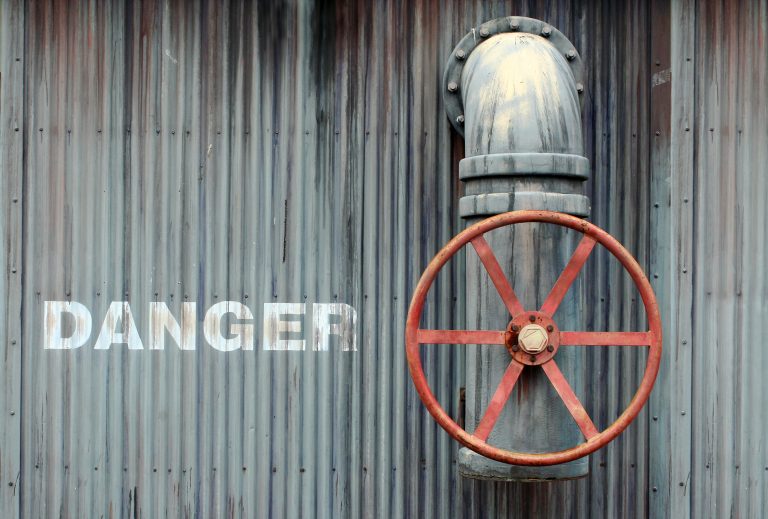
A First Aider has a moral obligation to protect themselves from harm.
Any First Aid personnel should immediately assess the situation in an emergency.
-
Look for any serious risk to personal safety (such as falling debris, hazardous materials, or violent/unstable people)
-
If there is a genuine risk to your well-being, you are well within your rights to remove yourself from the area and call for appropriate assistance
-
Only stay at the scene if you are satisfied that there is no personal risk involved
After all, no one will wish for any further casualties if they are preventable.
Is It Safe for You to Go Up to the Casualty?
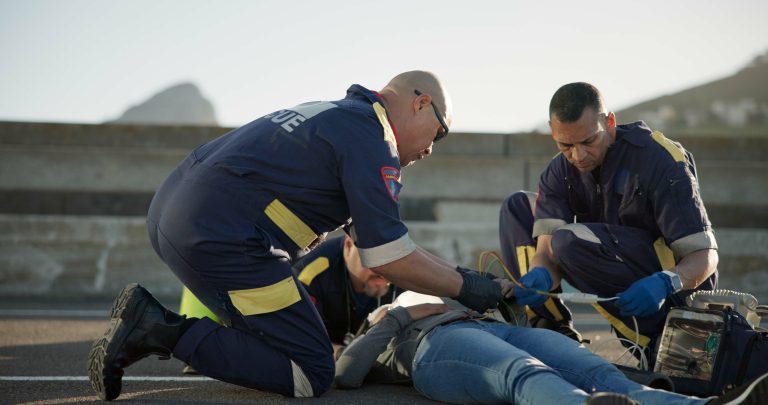
After the initial risk assessment at an emergency scene and confirmation that there are no immediate dangers, a First Aider should check whether they are able to fully approach the casualty or not.
This will depend on:
-
The status of the environment (accessibility, people in the vicinity, etc.)
-
The condition of the patient (distressed, in extreme pain, etc.)
If the casualty is fully conscious, try to obtain consent before you touch or approach them.
Always be fully aware of your surroundings and only move the patient if it is absolutely vital to their well-being.
What Has Caused the Accident and Situation?
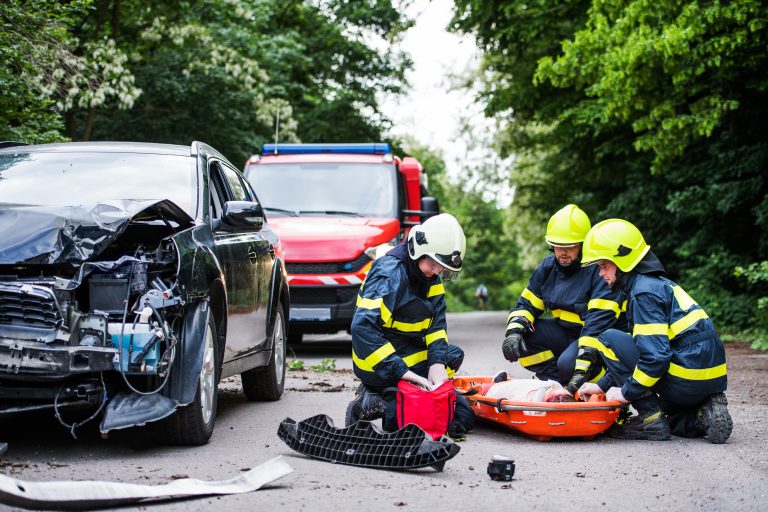
If the cause of an accident is not immediately obvious, a First Aider must determine if there is any risk of a re-occurrence (falling debris, unstable surfaces, etc.) and react accordingly.
-
If the danger has passed or been fully mitigated, then treatment can proceed as applicable
-
Even if the cause of an accident or illness cannot be categorically identified at the time, every detail and event should be recorded (via an Accident Book or other documents) to aid future investigations and treatments
What Do You Think the Main Injuries Could Be?
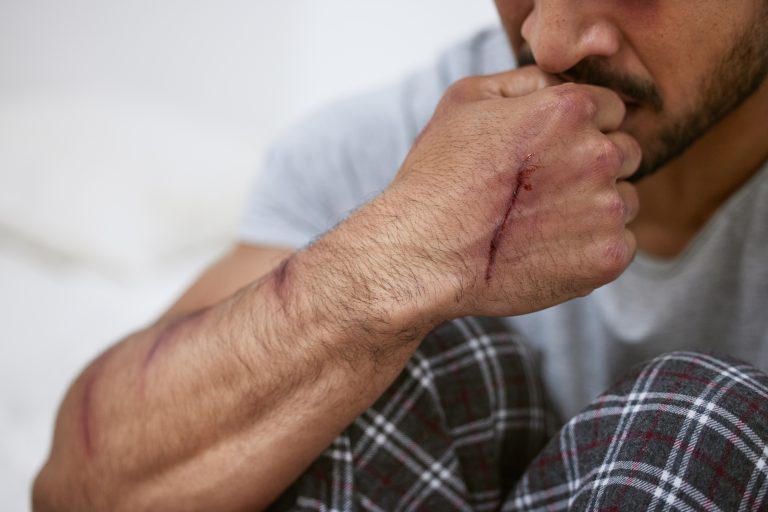
In some cases (such as burns and cuts), the severity and placement of an injury can be quickly identified. However, a First Aider should never take things purely at first sight.
Always communicate directly with the patient if possible and gather as much information as possible.
Also take into consideration observations such as:
-
Visually obvious clues such as bleeding, scratches, swellings, or deformities of the body
-
Loss of sense or feeling in any part of the body
-
Audible problems with breathing
-
Ongoing pain or discomfort in a particular part of the body
How to Make the Area Safe
Although the initial assessment from a First Aider should determine any risks or danger at the scene, they should also ensure that the area remains safe to themselves, the casualty, and everybody else.
-
Ensure that the area is as clear as possible
-
Reduce susceptibility to interruptions or further incidents
-
Check on the normal use of the area and whether it would be appropriate to apply warning signs or barriers, particularly when vehicles or bystanders may be involved
If the area is believed to be unsafe, then (and only then) should the casualty be moved somewhere else.
How to Assess the Casualties
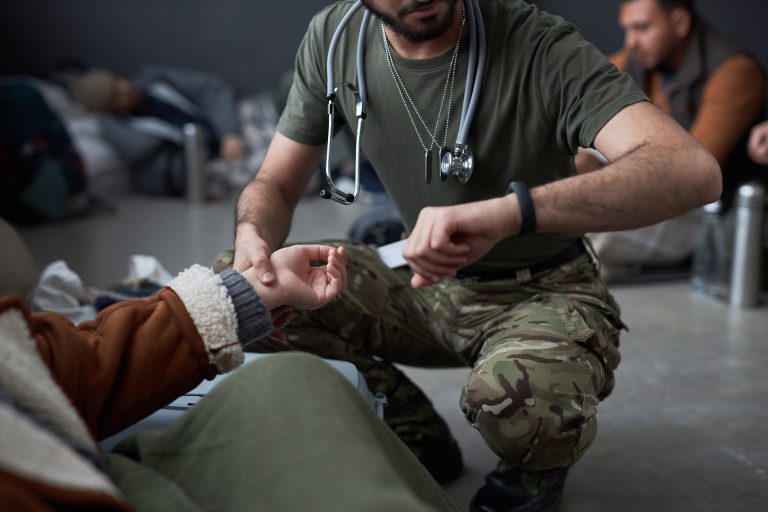
If the patient is conscious, it is extremely important that you communicate with them as much as possible and get feedback on their well-being.
An existing health condition (diabetes, asthma, etc.) may have an impact on their status and your assessment.
Also check the following aspects of the casualty:
-
Attention span – Do they become dizzy or periodically lose alertness?
-
Skin colour – Is it becoming pale or inflamed?
-
Response to stimulus – Are they responding to touch or treatment negatively?
Taking all these questions into consideration should allow any First Aider to provide an accurate assessment of an emergency situation.