First Aid Equipment

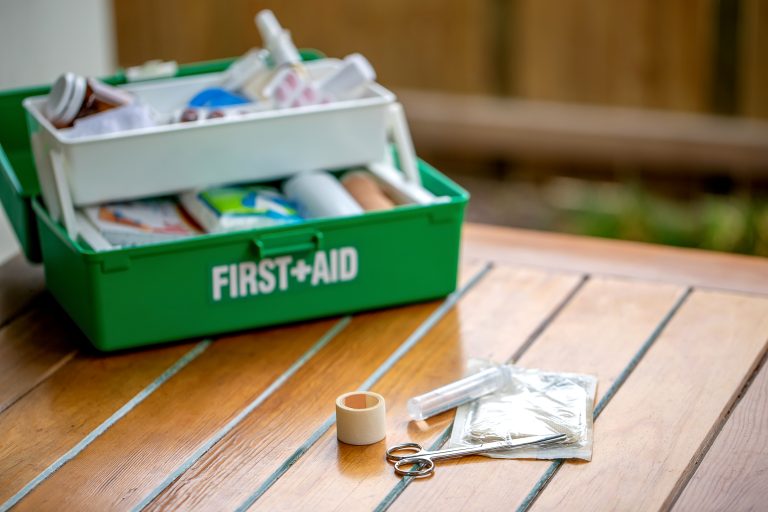
Every First Aider should have immediate access to essential First Aid equipment.
A basic kit should include:
-
Dressings
-
Plasters
-
Sterilised wipes
-
Gloves
-
Bandages
-
Accident report forms
-
Health and safety documentation
Always ensure equipment is in date and replaced when necessary.
Prioritising the Treatment of Casualties
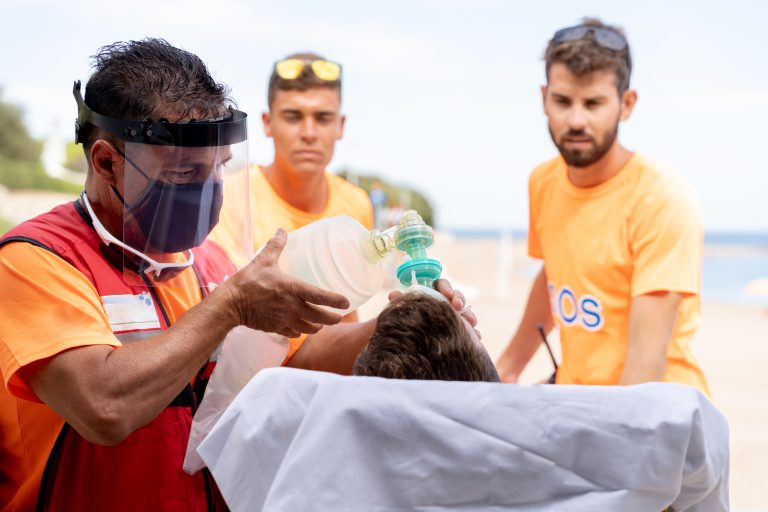
When determining priority, consider:
-
Breathing difficulties
-
Bleeding (amount and severity)
-
Burns (extent and severity)
-
Other serious conditions
These priorities may change depending on circumstances.
Contacting the Emergency Services

In the UK, emergency services can be contacted by calling 999.
As a rule of thumb, use the LINE acronym when providing information:
-
L – Location (address)
-
I – Incident (what happened)
-
N – Number of casualties
-
E – Extent and seriousness of injuries
RIDDOR – Reporting of Injuries, Diseases and Dangerous Occurrences Regulations
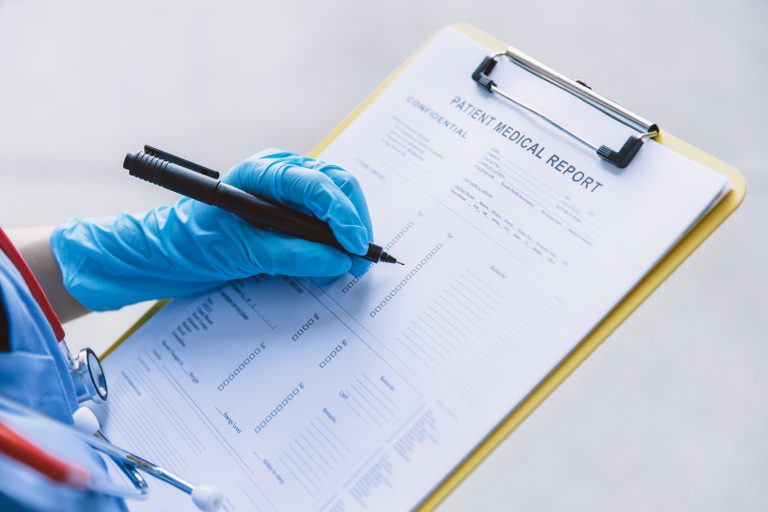
RIDDOR Reporting of Injuries, Diseases and Dangerous Occurrences
The Reporting of Injuries, Diseases and Dangerous Occurrences Regulations 2013 is UK legislation put in place to ensure that appropriate incidents are reported correctly and fairly.
The basic stipulations are that Employers and Duty-Holders of property must report workplace incidents which result in:
-
Deaths
-
Injuries
-
Hospital treatment
-
Any type of “dangerous occurrence”
The legislation also provides guidance for identifying which incidents are reportable. The regulations apply even when other authorities are investigating, and the HSE recommend that all incidents should be reported when in doubt.
The Management of Health and Safety at Work Regulations 1999
This set of regulations recognises the duty that employers have to understand and prepare for risks to their employees (and non-employees) during required work activities.
As a result of these rules, Employers must have appropriate procedures in place to ensure the well-being and safety of all those on the premises.
They also need to make sure that emergency arrangements are in place, with full information circulated to all Employees.
Employees are also expected to work in conjunction with their Employer and alert them to any concerns they have with the environment or safety in general.
Duty of Employer to Make Provision for First Aid
All of this legislative work is partly in place to make Employers take responsibility for providing First Aid in the workplace.
Assessment of First-Aid Needs
When assessing the level of First Aid requirements that need to be in place in a workplace, the employer needs to take into account the following factors:
-
The sort of work that is performed on-site and the risks it entails
-
Any previous history with accidents or injury
-
The number, age, and circumstance of the employees
-
The hours which the employees work
-
The off-site staff and travelling workers
-
How the employees are spread out in the property
-
How close the property is to existing medical practices (hospital, doctor’s surgeries, etc.)
-
Time of the year and local environment (e.g. would a bad winter hamper travel expectations?)
-
Annual leave and sickness cover (First Aiders and Health & Safety representatives must have deputies)
With all that information, an employer should be able to make a well-judged decision on important First Aid supplies and personnel.
Accident Book

The information taken at the time should consist of the following points:
-
The date and the exact time it occurred
-
The details of the employee injured
-
The details of the injury and the physical effect on the employee
-
A full description of the accident, events leading to it, and the root cause
-
Any valid witnesses who can be contacted for more details
The Accident Book is deemed to be an invaluable resource for Employers and Employees in order to comply with the requirements of RIDDOR.
By law, all businesses with ten or more employees in the workforce should have an easily accessible register for documenting the details around a serious incident, which qualify for being reported under RIDDOR guidelines.
First-Aid Materials, Equipment and Facilities

Employers have a duty to provide facilities where First Aid treatment can be safely applied. In most cases, this will be a room allocated where appropriate equipment and materials can be stored for regular use.
First-Aid materials, equipment and facilities should include:
-
Refuse containers and sealable bags for the disposal of medical waste
-
Blankets
-
A couch or sofa where an employee can rest or be examined
-
Telephones and communication equipment
-
A register (or the company Accident Book) where details of treatment are recorded
Of course, a full First Aid kit/box will need to be present, containing previously mentioned equipment.
If a small company or premises cannot feasibly allocate a First Aid room, then procedures must be in place to allocate a suitable area in an emergency.
A First Aid room will typically require the following to be present:
-
Hot and cold running water
-
Cleaning agents, along with disposable paper towels or clean cloths
-
A cupboard or storage area for equipment and materials
-
Clean drinking water and other appropriate beverages
First Aid Personnel
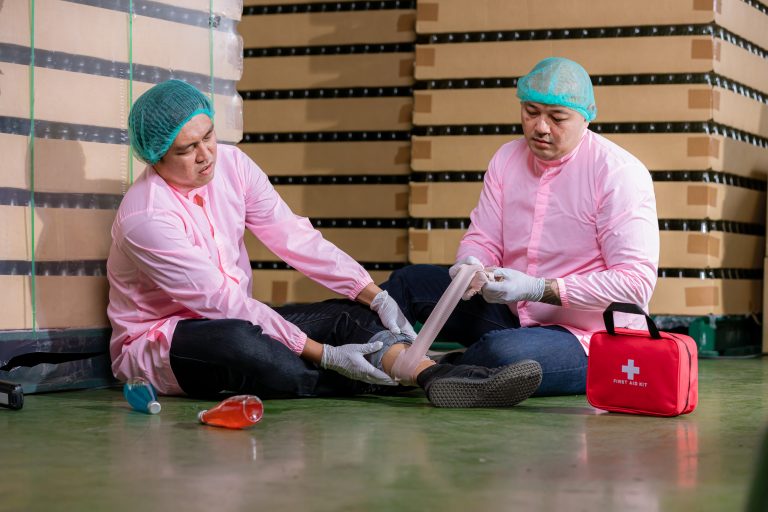
When an employer conducts a First Aid assessment, it should identify how many employees are to be trained in First Aid and be available at any one time.
The number of locations, size of properties, and the risk individually measured at each site should also be considered.
Once they have an idea as to the number of First Aid personnel needed, the decision on who to choose from the workforce will need to be made.
First Aid Personnel – Suitable Qualities
The potential First Aider needs to be agreeable and willing to take on the responsibility, but an employer also needs to take into account each individual’s skill set, such as:
-
Being reliable and calm in a crisis
-
Having good communication skills
-
The ability to rapidly learn and retain new skills
-
Having non-critical work duties that can be deputised or left for some time
-
Being willing to give extra time to training and emergency duties
First Aid Training
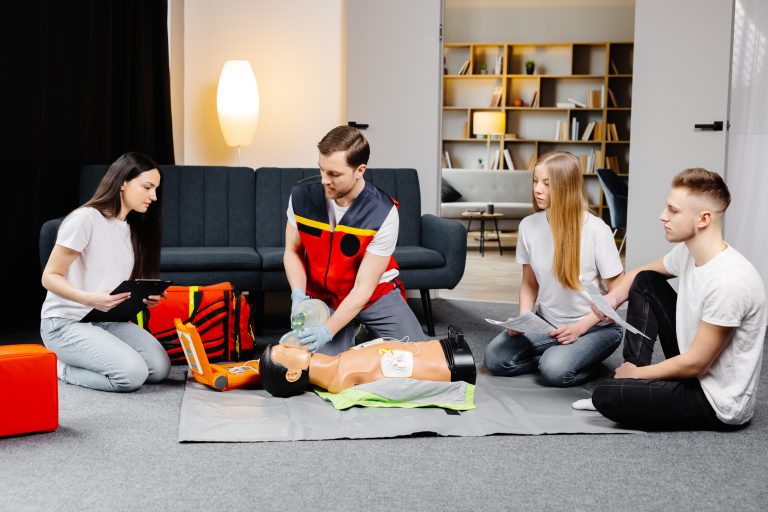
When an employer has identified who will require First Aid training, they then need to organise the training itself.
Typically this will usually consist of attending a course to become proficient in one of two competencies. These are:
-
Emergency First-Aid at Work (EFAW) – Basic First Aid treatment for workers who become injured or ill
-
First-Aid at Work (FAW) – This includes all of the EFAW training, but also adds more complex procedures for specific injuries and illnesses
The employer will decide which is more appropriate and organise attendance.
FAW courses take at least 18 hours (3 days) to complete, and EFAW training courses are around 6 hours (1 day).
The First Aid personnel will receive a certificate upon completion, which is valid for three years, when a refresher course is required. At the discretion of the employer, further intensive training can be sought.
Information About First Aid Arrangements for Employees
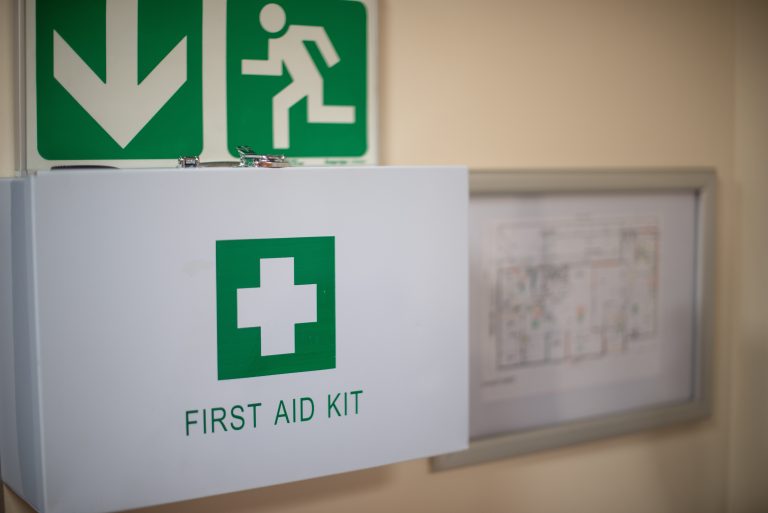
Once all training and arrangements have been completed, the employer must ensure that all employees are aware of the details.
During regular communications to the workforce, they should be made aware of:
-
First Aid locations
-
Equipment
-
Personnel
This should be communicated in any appropriate information format (meetings, emails, etc.), with any changes or updates being highlighted.
Ideally, an employer should also have an Employee Information board and/or a First Aid board, where notices can be regularly posted regarding current First Aid contacts and emergency procedures.
It is also the responsibility of the employer to ensure the messages are posted in an understandable way and, if needed, in multiple languages – especially where several languages may be in use.
Duties of a Self-Employed Person
Despite all the responsibilities that an employer holds, it remains the duty of a self-employed person (contractor, renovator, etc.) to fully ensure that they have suitable access to First Aid facilities and equipment.
Low-level First Aid equipment (such as plasters or gloves) are expected to be supplied by any self-employed person working on-site at a property.
However, if a self-employed worker is being charged with something outside of their “normal” duties (confined space, height, etc.), then it remains the duty of the employer to provide the extra equipment and facilities.
Cases Where These Regulations Do Not Apply
As with any set of regulations, there will be exceptions to the rule. Some work is so specialised and dangerous that it will have a unique set of guidelines.
This may involve the presence of a permanent medic and special facilities, and is the responsibility of the contractor-owner and/or the “Person-in-Charge”.
This mostly applies to Offshore work and Diving Operations.